


Thucydides' Trap shapes the balances of a multipolar world
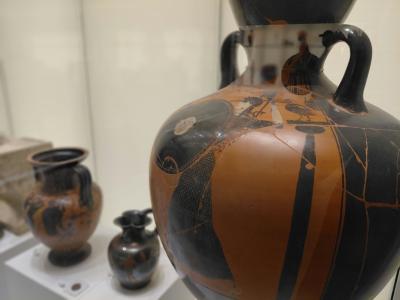

European civilization was born in Hellas, homeland of giants and illustrious men. Once again, the Greece of great philosophers and thinkers forcefully returns to the forefront in the present.
The upcoming trilateral summit in China between Xi Jinping, Putin, and Donald Trump is the emblem of a world that has changed its paradigms with the return of empires, spheres of influence, and multipolarism.
During Trump's visit to Beijing last May, the President of the People's Republic of China raised the specter of a new conflict, that of the "Thucydides Trap."
The definition actually originated in the United States, with the studies and academic publications of Graham Allison, a political scientist and esteemed former Assistant Secretary of Defense for the Clinton and Reagan administrations.
A versatile and cultured personality, Allison spoke of the United States and China as two fronts "destined for war," as Sparta and Athens were in the famous Peloponnesian War, which was narrated by the historian Thucydides himself and became a cornerstone of Greek literature. A conflict that would arise because of Sparta's fears of Athenian expansionism. A widespread political project, that of Athens, was based not only on war and brute force but also on the allure of the arts, the virtuosity of poetry, and dialectical philosophy, still today the first real legacies of Western civilization.
/// Hunger overcame the weapons and the cultural capital of the classical world surrendered to the enemies. ///
Athens had created the Delian-Attic League, openly challenging the dominance of the Spartan arms, but had to surrender to the military overwhelming power of its opponents.
In 405 BC, at the Battle of Egospotami, General Lysander defeated the Athenian fleet in the Dardanelles. Having lost dominance over the seas, Athens took refuge in the high city walls but the resistance lasted only a few months. Hunger overcame the weapons and the cultural capital of the classical world surrendered to the enemies.
The consequences were brutal and punitive, with the dissolution of the Athenian fleet and the Delian-Attic League, as well as the destruction of the Walls that allowed privileged and safe access to Piraeus.
The fate of Athens would also be brutalized by the arrogance of a new puppet government that became famous as the executive of the Thirty Tyrants (οἱ τριάκοντα), a pro-Spartan noble oligarchy dominated by the figure of Critias, a brutal intellectual and sophist who in his youth had even been a disciple of Socrates and a distant relative of Plato.
The regime would last only a few months, leaving a deep and humiliating wound for Athens' proud and moderate legacies.
Thucydides' Trap would therefore trigger when an emerging power challenges the dominance of the hegemonic one. To date, the precedents are not at all encouraging.
/// The Dragon is now well integrated into all global value chains and has built an empire that combines the political doctrine of post-Maoist communism with unrestrained economic liberism. ///
In the volume Destined for War: Can America and China Escape Thucydides's Trap? Allison thus retraced centuries of history by publishing at Harvard a series of scenarios in which the final outcome is always an open confrontation (12 case studies out of 16).
Among others, it was the same for the Napoleonic wars, the eternal conflict between Prussia and France, the most brutal turning points of the twentieth century, and the two world wars with the anti-German fronts between 1914-1918 and 1939-1945.
The bloody war in the Pacific between Japan and the United States also stands out after the American embargo, the fire at Pearl Harbor, and the American offensive in the Midways.
The Cold War, however, did not escalate into a frontal conflict between vetoes, threats, and "military relocations" of the eternal challenge between capitalism and communism.
Nowadays, in the multipolar scenario, China is the emerging power challenging the American century.
The Dragon is now well integrated into all global value chains and has built an empire that combines the political doctrine of post-Maoist communism with unrestrained economic liberism.
This baroque hybrid uses diplomatic and silent weapons to surpass its competitors, and complicit in the military swamp into which Putin's Russia has entered with the war in Ukraine, it has taken the crown of the anti-Western BRICS alliance, surpassing and "incorporating" into its sphere of influence what was once the heart of the Soviet Union.
Xi Jinping again mentioned Thucydides' Trap last September, showing a sharp paradigm shift from the usual and inscrutable silence of those who "wait for the enemy's corpse on the riverbank."
Whether the trap is not an inevitable fate is unknown, but the end of a hegemony, as in the case of the Stars and Stripes Empire, could definitively and inevitably change the world that will come.

Read also


Law and Justice and the Importance of Poland's Historical Memory
On July 31, 2004, the Museum of the Uprising was inaugurated in Warsaw, decades after its establishment and years of work for its construction.
Alarico Lazzaro


Nawrocki's existential victory revives the Polish right-wing
These have been difficult years for the Polish right-wing. After returning to the center of the geopolitical chessboard thanks to the dynamism of the Morawiecki government in times of war on the borders of Eastern Europe, Donald Tusk's progressive coalition had prevailed in the October 2023 elections, beginning a progressive process of demolition of the institutional structures cemented by the Law and Justice party over the years.
Alarico Lazzaro


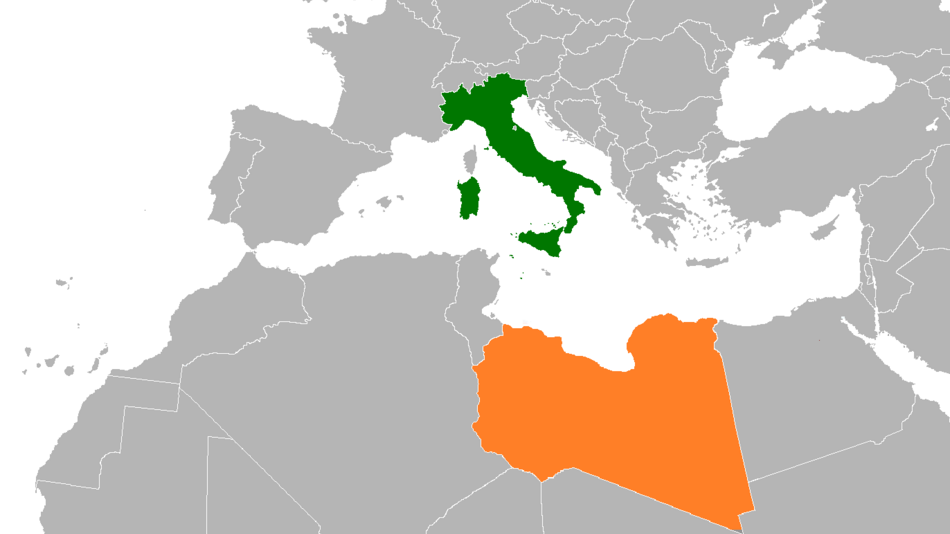
Italy and Libya: a century-long relationship in the great game of the Mediterranean
On November 26, 1911 in Barga, the poet Giovanni Pascoli delivered a speech destined to remain in the annals of Italian history.
Comments (0)