


Non-Germanic Central Europe: key to European stability or periphery of empires?
A few years ago, I had an opportunity to read the first English translation of treatises by a Polish Catholic bishop and lawyer Pawel Włodkowic (1370-1435). The treatises were written in Latin and had never before been translated into Polish or English. Among others, they contain Włodkowic’s speeches at the Council of Constance (1414-1418), in which he participated as a member of the Polish delegation. Włodkowic argued that, based on natural law, nations have the right to exist in peace even if they are not Christian. Conversion by force should not be practiced or encouraged. He argued for recognition of the rights of nations and for institution of international law that would oblige European powers to stay within the borders of their states and abstain from starting wars with their neighbors to enlarge their territory, under the pretext of converting them to Christianity.
This proposal went against the interests of the Order of Brethren of the German House of Saint Mary (otherwise known as the Teutonic Knights). The Knights moved to Europe after their role in the Holy Land had ended. Their raids into territories occupied by the Baltic tribes became infamous in non-Germanic Central Europe. The Knights justified them by claiming that the ignoble savages urgently needed a disciplining hand which the Knights provided. The issue would have rested there, so far as the Council of Constance was concerned (the Baltic tribes had no spokespersons at the Council), were it not for Włodkowic. He came to Constance with detailed knowledge of the hundreds of cases in which the Knights were accused of robbery of Baltic property, destruction of the already existing churches, theft of liturgical vessels (which the Brethren later sold in Western Europe), and illegal annexations of land. In his speeches to the Council Włodkowic argued that the Knights raided territories that had already been christianized by Lithuanian- and Polish-sponsored clergy, and that they presented to the Pope a mendacious account of their doings. To remedy the situation, Włodkowic proposed dissolution of the Teutonic Order. In his view, the Order was heretical. Włodkowic introduced the term heresia Prussiana to describe the Order’s doings. He stated that the Teutonic Knights destroyed over a hundred churches in Lithuanian and Polish territory; he also mentioned public executions of those who resisted the Knights. These were robbers pure and simple, argued Włodkowic, and perpetrators of these atrocities should be punished. Indeed, an Order that engaged in such doings should be dissolved (1).
/// The misdeeds and crimes of the Knights and their long-term consequences played no role in shaping the remembered history of Europe. ///
Johannes Urbach de Bamberg and Johannes Falkenberg were the two Germans who responded to Włodkowic’s accusations. Urbach maintained that pagans have no rights. Falkenberg accused Włodkowic of heresy and proposed genocide of the entire Polish tribe including its Lithuanian king Jagiello (Iogaila). Falkenberg’s proposal was rejected, and some of the lands seized by the Order were returned to the Polish princes; however, Włodkowic did not win the debate. His proposal to formulate an outline of international law was passed over and to this day, Bartholomé de las Casas (1484-1566) is considered to be the first proclaimer of the right of nations to exist without being subjected to military conquest.
Włodkowic proposed that the Council proclaim the existence of international law (stemming from natural law) to which all Christian countries would adhere. This law would oblige nations and tribes to abstain from attacking their neighbors if the neighbors were peaceful. The Council listened but did nothing.
I submit that at least partially, the Council’s inaction was caused by ethnic animosities. The rise of European nationalisms is traceable not to the French Revolution but to the cultural sense of cohesion and loyalty developed in the Middle Ages (2). Ethnicity played an unacknowledged role at the Council. The participants deemed other issues to be of greater importance than the complaint of an obscure representative of a national group that was several times smaller than the German delegation, indeed it was counted as part of the German delegation. Their judgment was at least partly based on ethnic solidarity. Years later, Włodkowic wrote about his failure in a letter to a fellow cleric. He sadly admitted that he was just an aging priest who did not prevail against the interest group that was unjustly praised at the Council.
The Teutonic order survived while maintaining a generally positive self-image. The pagan Prussian raids into Polish and Lithuanian territory, and Cuman raids into Hungary are remembered, while the lawless raids of the Knights into both christianized and pagan territory have been forgotten. The misdeeds and crimes of the Knights and their long-term consequences played no role in shaping the remembered history of Europe. In 1900, Polish writer (and Nobel Prize winner) Henryk Sienkiewicz published a novel about the Knights that resonates with Włodkowic’s account. English translation appeared in the same year. The novel was translated into German in 1901. It met with dead silence. Sienkiewicz’s novel went against the established truths. In the early twentieth century German power was credited with maintaining peace on the continent, and a proposal to question it, however unrelated to contemporary political realities, was not what those in power wanted. In 1901, the nations of non-Germanic Central Europe were a little more than colonies of European empires. While in the Middle Ages Europe was divided into nation states, nineteenth-century Europe was divided into empires: Russian, Prussian, Ottoman, and Austrian. It was a classical case of white-on-white colonialism, although empires shielded away from such terminology, preferring instead to reserve it for overseas colonies. They were amazingly successful in avoiding the terminology of colonialism: the expression “white-on-white colonialism” came to life only in the twenty-first century. I submit that the elimination of non-Germanic European voices from the image of Europe weakened European civilization and contributed mightily to the troubles it has experienced in the twenty-first century.
/// What would have happened if the Council of Constance pursued the road suggested by Włodkowic? The centuries-long German Drang nach Osten probably would have been weakened or not taken place at all. ///
Virtually all conservative thinkers in Europe lament World War 1 and the destruction of the continental empires that followed. The wondrous return to the Europe of many nations does not seem to weigh in much in academic assessment of the Peace of Versailles. Woodrow Wilson is often blamed for consenting to it, indeed promoting it. As if the well-being of smaller nations did not count at all. It. is a generally accepted view that the Versailles Treaty rather than the Teutonic drive for importance and territorial enlargement is responsible for World War 2.
What would have happened if the Council of Constance pursued the road suggested by Włodkowic? The centuries-long German Drang nach Osten probably would have been weakened or not taken place at all. Catholic Poland would have been strengthened and Catholic influence spread throughout Central and Eastern Europe. The intellectual and political division of Europe into Western and Eastern might not have developed. Differences in material wealth between West and East would have abated. Never mind pipe dreams: I would like to submit however that the doings of the Teutonic Knights in non-Germanic Central Europe initiated the process of shutting out and excluding non-Germanic Central Europe from mainstream Western culture. After the Napoleonic wars, the “discovery” of Russia and its culture further contributed to this practice. Territories that separated Russia from the West shrank in importance and visibility. Their intellectual achievements were not incorporated into the Western mainstream, while their military resistance to conquest from the East and South was not recognized as crucial to preservation of Western culture. Interpretation of European history became faulty at the very foundation, never to be corrected. The nations of non-Germanic Central Europe drained their energies on liberating themselves from the colonial yoke rather than on building up their image vis-à-vis their Western neighbors. As is common in colonized societies, a habit of looking up to “the West” was born as if “the West” consisted of more valuable population, better art, and finer history than the colonized lands. This inferiority complex still persists among Central Europe’s poorer classes. Humanistic scholarship developed at Western universities ignored scholarship and literature created by subjugated nations. To this day, most “Western European” professors of humanities would find it difficult to find stored in their memory at least one paragraph written by a non-Germanic Central European writer.
Western conservatives are much to blame in this respect. In the nineteenth century in particular, they allowed non-Germanic Central Europe to slip away from the area designated as “Europe,” even though this part of Europe had more in common with their own proclaimed beliefs (Christianity and tradition) than post-revolutionary France, colonial Great Britain, or land-greedy Germany. Western conservatives have sided up with the empires (many still do). They have routinely lamented the weakening of empires after World War 1 and the creation of independent states in territories where these independent states existed in the premodern era. These laments amount to empire worship. They contribute to the decline of the West. The West shrank by its own volition. Not just geographically, but also intellectually, because the notion of “Europe” was diminished. A large part of Western civilization was consigned to invisibility and thwarted growth under the rule of ethnically hostile governments.
/// The non-Germanic nations of Central Europe did not disappear entirely, despite costly efforts to erase them. In most cases, de-nationalization failed. ///
Can such distortions as those illustrated by the newly discovered medieval text be corrected? Not instantly; however, one should become aware that the history of Europe contains such deformities.
The non-Germanic nations of Central Europe did not disappear entirely, despite costly efforts to erase them. In most cases, de-nationalization failed. Still, they spent a disproportionate share of their creative energy preserving their identity rather than building modern communities and developing industries, banking, insurance systems, and other foundations of modern prosperity. Their citizens wrote poetry instead of building societies, because poetry was one of the few available means of preserving communal identity. Their goal was biological and cultural survival, not global competition. These colonized nations could not follow the path of development enjoyed by the occupying powers. Their contribution to Western thought was ignored. Who in Western Europe knows and admires Feliks Koneczny? Yet Koneczny’s theorizing about civilizations preceded Huntington’s and might have helped avoid policy mistakes in post-World War 2 Europe.
To be sure, the creation of the European Union made a difference. It has not however solved the deeper problem of integrating “the many faces of Western culture” into a strong and wide panorama. Intellectual achievements of “the other Europe” are still treated as a kind of spice added to the European menu—the way individuals from behind the Iron Curtain were treated in communist times (Václav Havel comes to mind), rather than as competition to nominalist theories and analyses produced in “the West.” To put it brutally, they have not been seriously considered as alternatives to visions of the world supplied by the tried-and-true members of the Western European network.
/// The lack of familiarity with the ideas that originated in non-Germanic Central Europe is glaringly visible in “old” Europe. This disregard commanded broad consent when Western Europe flourished; today, one does not have to look at the share of world economy claimed by Western Europe to see the area’s decline. ///
Scholarly journals published in “the East” are seldom quoted in “the West.” In social media, few Westerners care to discuss issues with non-Western colleagues. One occasionally observes a “kidnapping” of scholars and writers from Central Europe to the chorus of the like-minded beneficiaries of Western European foundations (generously distributing grants and points of view); there is no reciprocal “kidnapping” of Western European intellectuals by non-Germanic Central European ways of viewing the world. Norman Davies is a good example: yes Virginia, despite all his praiseworthy works on non-Germanic European history, he has successfully avoided being counted as someone representing a Central European view. In Western Europe there also is no perception, let alone acknowledgement, of the continuity of non-Germanic Central European vision of the world and the trajectory of development built around it. The works of non-Germanic Central European writers remain on the margins of world literature as seen by Western European critics. Books from Hungary, Poland, Estonia, or the Czech Republic do not sell well. Jaan Kross’s great novel The Czar’s Madman (1978) sank into oblivion in the West. The lack of familiarity with the ideas that originated in non-Germanic Central Europe is glaringly visible in “old” Europe. This disregard commanded broad consent when Western Europe flourished; today, one does not have to look at the share of world economy claimed by Western Europe to see the area’s decline. Therefore, moving the center of gravity of Western civilization a bit farther to the east might be a good way of stalling the disintegration Michel Houellebecq so well outlined in Soumission (2015).
Let me mention one more example. I have always been fascinated by the discretion surrounding the partitions of Poland. All three of them. My fascination is caused not so much by military successes of the partitioning nations, but rather by conspicuous silence surrounding preparations for this unprecedented event and negotiations that must have preceded the destruction of a major European state. Furthermore, I have never found an explanation of the agreement (allegedly signed several years after the third partition) to wipe out the word “Poland” and “Polish” from European vocabularies (3). Was it shame that compelled several European states to do away with one of their neighbors? That is too easy and too moralistic a possibility, and morality certainly played no role in the political cannibalism that took place in 1772, 1793 and 1795.
In mid-eighteenth-century Poland was a major European country. Its history went back to the tenth century, its kings occasionally intermarried with other European monarchs, its religion was Christian—why should such a major event as disappearance of a large country be wiped out from European memory? Owing to dynastic arrangements (not identical with military conquest!), large swaths of Belarus, Lithuania and Ukraine belonged to the Polish - Lithuanian Kingdom at that time (the alternative was to belong to Muscovy, with predictable results). Its kings were elected, much like presidents of states today. Polish contribution to the history of republicanism remains one of the best kept secrets of history. Why have Western European and American historians written so little about this under-explained topic? What about russification of Ukraine and Belarus under Muscovite rule? Did not the elimination of Poland from the European scene go against the Peace of Westphalia? What was the partitions’ influence on the subsequent history of Europe? Why did the partitioning powers not resort to appointing a puppet king in Warsaw? Why was the existence of the Polish-Lithuanian Commonwealth unacceptable to Prussia, Austria and Russia?
/// History offers many examples of conquest of one power by another. The conquered nation continues to exist under foreign rule. Why was Poland slated into non-being? ///
The mechanism of the partitions has never been explained by any scholar I am familiar with, perhaps because undertaking the task of explaining it would require fluency in three or four languages and archival studies in more than three countries. Furthermore, the nations engaged in this unprecedented act of ethnic cannibalism have been very discreet about their negotiations. They have not cared to reveal to the world the details of their decisions. They preferred to attribute to their Besserwissenshaft and strength the process of denying existence to their longtime neighbor. History offers many examples of conquest of one power by another. The conquered nation continues to exist under foreign rule. Why was Poland slated into non-being? Prussia and Russia in particular should have produced scholars explaining the motivation behind a Carthage-like attempt to make Europe forget about its eight-hundred-years-old constituent. Negotiations between the three states must have been fascinating. Arguments used deserve to be brought to light. How was the agreement born that the word “Poland” should be erased from history?
The absence of a strong Poland did not bring stability or peace to Europe. The nineteenth century was punctuated by revolts and uprisings. The presence of a strong Catholic Poland in the east would have likely prevented the communist revolution in the Russian empire and the slaughter of millions that followed. The rise of national socialism in Germany would have been unthinkable if Prussia were not strengthened and enriched by annexation of a sizeable part of Polish lands. In spite of its weaknesses and mistakes (including its inability to avoid quasi-colonial treatment of Ukrainians and other minorities), the Polish state was a necessary ingredient of peace in Central Europe. It remains so to this day. In June 2026, during his visit to Poland, the right-wing candidate for French presidency Jordan Bardella noted that if Poland did not exist, it would have to be invented because nothing could replace it as an element of balance in Eastern Europe.
The consequences of squeezing non-Germanic Central Europe into the periphery have been dire. Perhaps the present moment is an opportunity to change the course.
Ewa Thompson, Rice University
Ewa Thompson is Professor Emerita of Slavic Studies at Rice University and author of Imperial Knowledge: Russian Literature and Colonialism (2000).
(1) Paweł Włodkowic, „Articles against the Prussian Knights of the Cross,” Writings (1416-1432): The Struggle for the Self-Determination of Central Europe. Tr. from Latin by Charles Kraszewski. Rome-Warsaw 2023: Angelicum University Press and Fundacja Swiętego Mikołaja, 2023, 193-301.
(2) Such is also the view of Anthony D. Smith, The Ethnic Origins of Nations (1986); see also Margaret Canovan, Nationhood and Political Theory (1996).
(3) Adam Zamoyski, The Polish Way: A Thousand-year History of the Poles and their Culture. London: John Murray, 1987, 5.

Read also
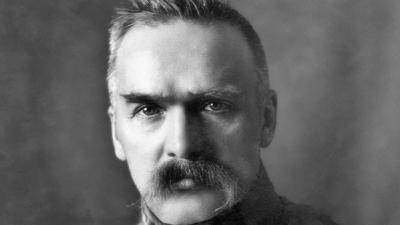
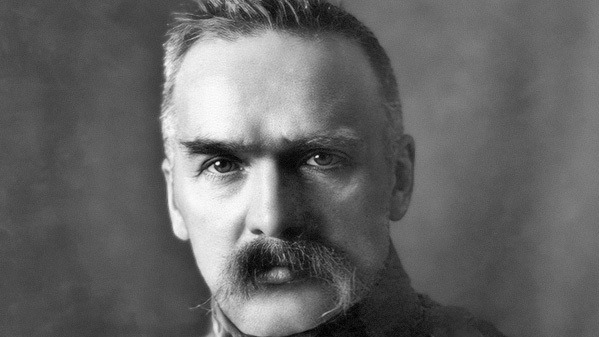
Book review: Jozef Pilsudski: Founding Father of Modern Poland
Written in a crisp and matter-of-fact style, with copious footnotes legitimizing it as an academic work, this volume can compete for the best Piłsudski biography to-date.
Ewa Thompson


Can We Communicate? On Epistemological Incompatibilities in Contemporary Academic Discourse
In 1990 the American philosopher Alasdair MacIntyre published Three Rival Versions of Moral Enquiry: Encyclopedia, Genealogy, Tradition. The last chapter of this book is titled “Reconceiving the university and the lecture,” and it ends with a proposition: in academic discourse we should “introduce” ourselves before we start speaking.
Ewa Thompson



On Decolonizing Slavic Studies in Europe and America
“War has uncontrollable consequences”, noted historian Steven Mintz in Inside Higher Education in January 2023.[1] Shortly afterwards in the same journal, Mintz argued that American academic scholarship is stagnating.[2]
Comments (0)